

When selecting an ion chromatography system for your lab, you need to start with a clear understanding of what ions you’ll analyze and the detection limits required Anion analysis. Not every instrument suits every task, so it’s crucial to match your specific needs with system capabilities like sensitivity, throughput, and maintenance demands. Getting this right upfront can save you time and costs later, but there are several factors you’ll want to weigh carefully before making a choice.
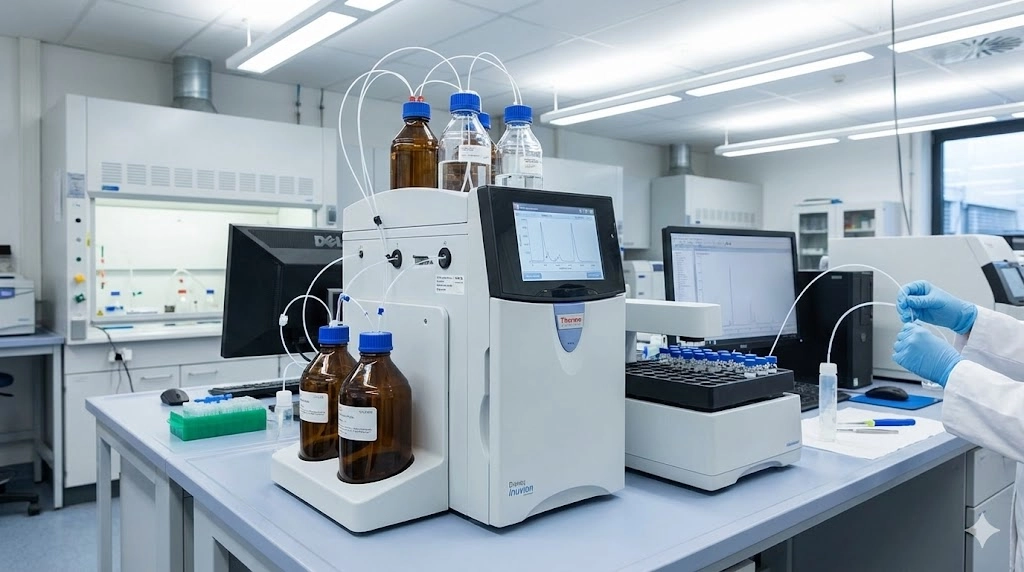
Understand Your Laboratory’s Ion Analysis Needs
Before choosing an ion chromatography system, you need to clearly define what ions you’ll analyze and the required detection limits https://laballiance.com.my/. Knowing whether you’re measuring common anions like chloride or more specialized ions like phosphate sets the stage for selecting the right system.
Consider the sample types and their complexity—do you handle environmental water, pharmaceuticals, or food samples? Each has distinct demands.
Also, think about your lab’s throughput and workflow: will you process many samples daily or just a few critical ones? Understanding these factors helps you avoid overpaying for features you won’t use or limiting your future flexibility.
Compare Sensitivity and Detection Limits of Systems
When selecting an ion chromatography system, you’ll want to closely compare each model’s sensitivity and detection limits to ensure it meets your analysis requirements. These factors dictate how well your system detects trace ions and handles low-concentration samples.
Consider these key points:
- Detection limit specifications—lower equals better for trace analysis.
- Sensitivity range—choose a system flexible enough to detect varying ion concentrations.
- Background noise levels—minimal noise improves signal clarity.
- Calibration stability—consistent sensitivity over time ensures reliable results.
Evaluate Throughput and Sample Capacity Options
Understanding sensitivity and detection limits helps you identify systems suited for low-concentration samples, but throughput and sample capacity also impact your lab’s efficiency. You want a system that matches your workload without slowing you down or forcing frequent pauses.
Consider how many samples you typically run daily and whether the system’s autosampler can handle that volume. Some models offer larger trays or faster analysis times, letting you process more samples with less hands-on time.
Think about future growth too—choosing a system with scalable capacity keeps your options open. Prioritize flexibility so you’re not tied to rigid limits, giving you the freedom to adapt as your projects evolve. Balancing throughput with sample capacity ensures your workflow stays smooth and productive every day.

Consider Ease of Use and Maintenance Requirements
Since you’ll be relying on your ion chromatography system daily, ease of use and straightforward maintenance are crucial factors to consider. You want a system that lets you focus on your work, not wrestling with complicated controls or frequent breakdowns.
Here’s what to look for:
- Intuitive interface – choose software that’s user-friendly, reducing training time and errors.
- Automated cleaning and calibration – this cuts down manual upkeep and keeps results consistent.
- Accessible components – ensure parts like columns and pumps are easy to reach and replace.
- Clear error notifications – so you can quickly address issues without guessing.
Prioritizing these features gives you freedom to work confidently, minimizing downtime and maximizing productivity.
Balance Cost With Long-Term Performance and Support
Ease of use and maintenance are important, but you also need to consider how your investment will perform over time. Choosing an ion chromatography system isn’t just about the upfront price; it’s about the freedom to rely on consistent results without unexpected downtime or costly repairs.
Look for systems backed by strong technical support and readily available parts. This ensures you won’t be stuck waiting when you need the system most. Durable components and proven technology reduce the need for frequent replacements, saving money and hassle in the long run.
Conclusion
When selecting an ion chromatography system, start by clearly defining your lab’s ion analysis needs and detection limits. Make sure the system matches your sample types and daily throughput without compromising sensitivity or selectivity. Consider ease of use, maintenance, and scalability to keep downtime low as you grow. Finally, balance upfront costs with long-term reliability and support to get the best value. This approach ensures you choose a system that fits your lab now and in the future.